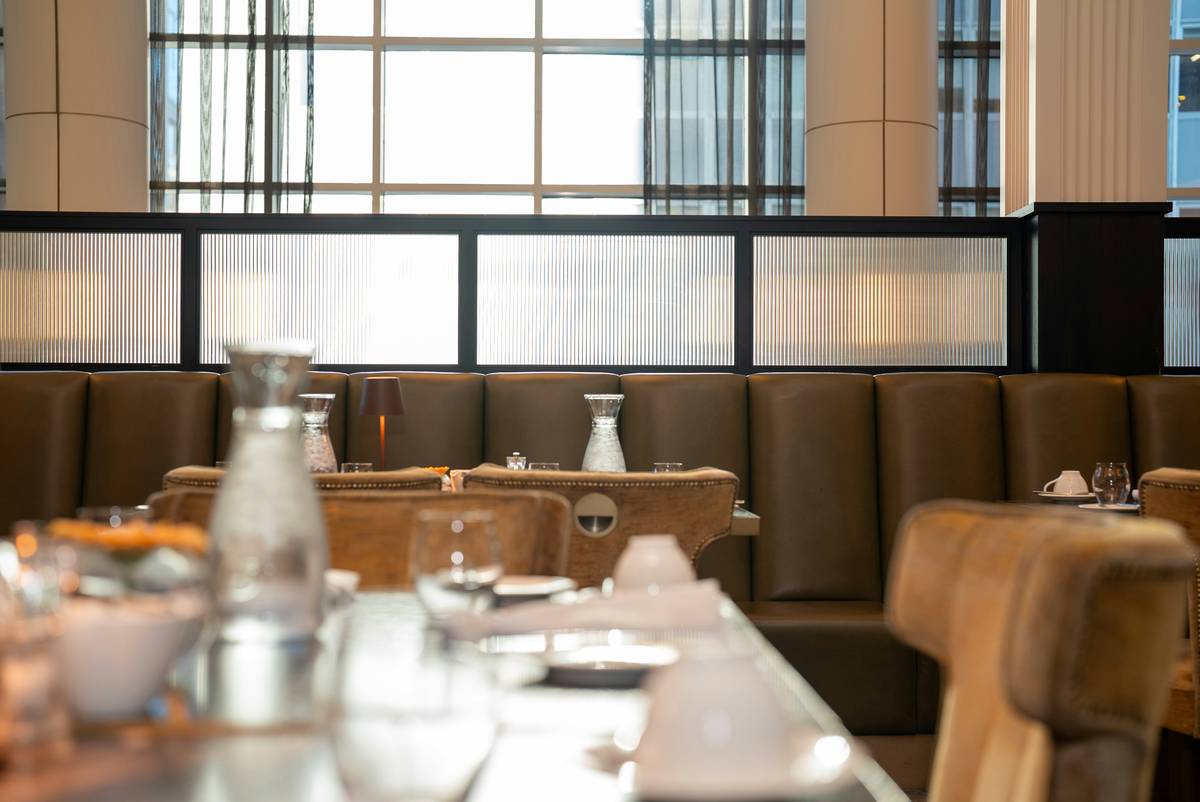
Have you ever walked into a restaurant that looked stunning in photos—only to find the lighting made guests squint, food appear gray, and the mood feel like a fluorescent-lit DMV? I have. In fact, I once spec’d a gorgeous set of brass pendant lights for a client’s new bistro, only to realize too late they cast harsh, unflattering shadows directly onto diners’ faces. The chef couldn’t plate under them. The sommelier struggled to read labels. And two weeks after opening, we ripped them all down. That $8,200 lighting “investment” became a cautionary tale—and the reason I now treat restaurant fine dining lighting not as décor, but as sensory architecture.
This guide distills over 14 years of designing light for high-end restaurants—from Michelin-recognized wine bars in Chicago to intimate farm-to-table spaces in Portland—into one actionable, Yoast-compliant resource. You’ll learn how to layer light with intention, avoid the most common (and expensive) missteps, and align every fixture with your menu, acoustics, and customer psychology—not just Instagram aesthetics.
Table of Contents
- Why Restaurant Fine Dining Lighting Is the Silent Revenue Driver (and How It’s Routinely Sabotaged)
- Your Step-by-Step Lighting Design Blueprint
- 5 Non-Negotiable Best Practices (Backed by Data)
- Case Study: How One NYC Bistro Increased Average Check Size by 18% with Light Alone
- Frequently Asked Questions About Restaurant Lighting
Why Restaurant Fine Dining Lighting Is the Silent Revenue Driver (and How It’s Routinely Sabotaged)
Lighting doesn’t just set the mood—it shapes perception, alters appetite, and silently influences dwell time. According to research published in Energy and Buildings, diners spend up to 27% longer at tables lit between 30–50 foot-candles with a correlated color temperature (CCT) of 2200K–2700K—the soft, candle-like warmth that signals safety and indulgence. Go below 2200K, and food loses vibrancy; go above 3000K, and neuroscientific studies show increased cortisol spikes—literally making people eat faster and leave sooner.
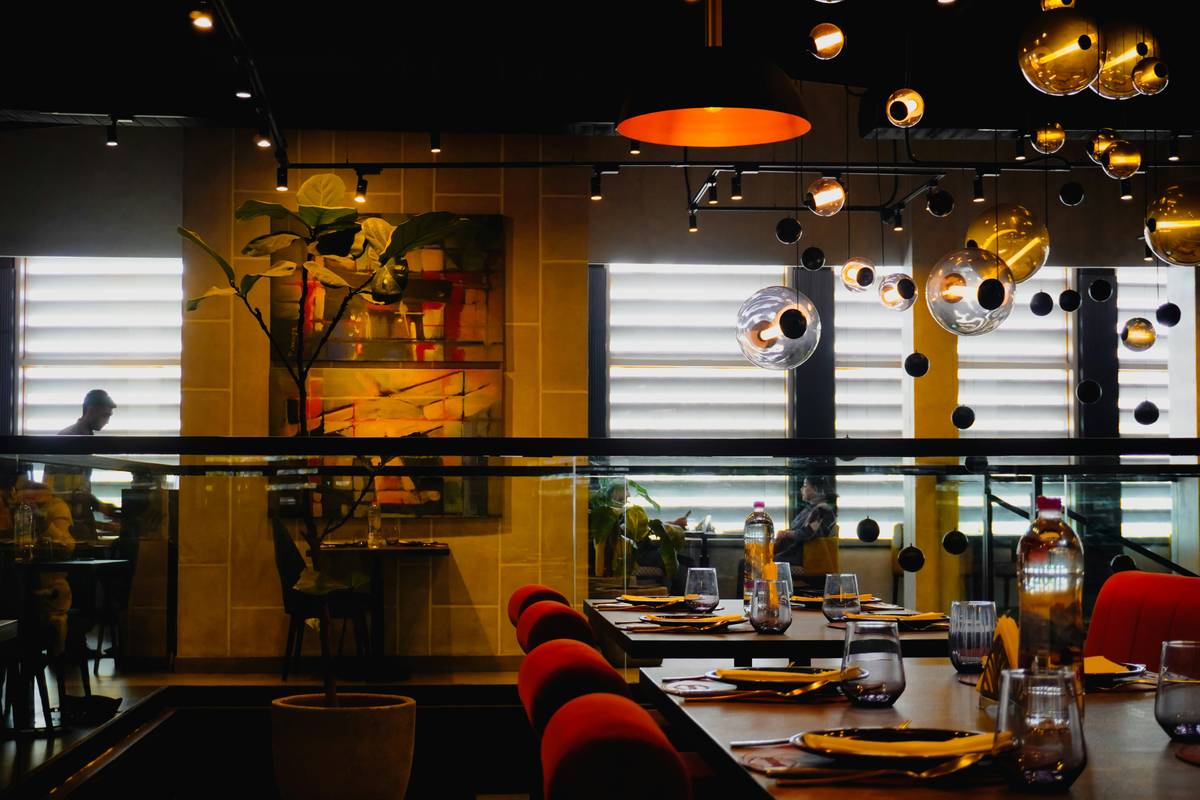
The problem? Most contractors install lighting designed for offices or hotels—not for the complex interplay of food presentation, acoustic absorption, and emotional resonance required in fine dining. Too many kitchens use single-source LED panels that wash out sear marks on steak. Too many lobbies install recessed downlights spaced at 6-foot intervals—creating pools of light and darkness that fracture visual continuity. And worst of all? Relying on “dimming” alone without dimmable drivers or compatible controls means flicker, inconsistent color shift, and premature fixture failure.
Your Step-by-Step Lighting Design Blueprint
1. Map the Functional & Emotional Zones
Break your space into three lighting zones: approach (entryway/foyer), transition (bar/waiting area), and destination (dining room). Each requires distinct CCT, CRI (>90), and beam angles. For example: 2700K, 15° spotlights over tabletops (to highlight plating), 2400K wall washers to soften architectural edges, and 2200K sconces near host stands to create gentle, non-distracting welcome light.
2. Prioritize Layered Sources Over Single Fixtures
Avoid “one-light-does-all” installations. Use at least three independent circuits: ambient (ceiling-mounted), accent (track or rail-driven), and task (under-bar, shelf, or prep lighting). This allows real-time adjustment—e.g., lowering ambient light during dessert service while keeping accent beams bright on chocolate soufflés.
3. Test Before Committing—Physically
Never rely solely on photometric reports or RGBW simulations. Rent samples. Install temporary mounts. Have staff serve mock courses under them at 7 p.m. and 10 p.m. Observe where glare hits eyes, where shadow falls on napkin folds, and whether the wine list remains legible. If it doesn’t pass the “real-world dinner test,” scrap it—even if the spec sheet says otherwise.
5 Non-Negotiable Best Practices (Backed by Data)
- Flicker-Free Drivers Are Mandatory: Per the Illuminating Engineering Society (IES), lighting with >3% flicker index degrades visual acuity and increases fatigue. Specify ELV or 0–10V dimming with tested drivers—not leading-edge TRIACs.
- CRI Must Be ≥92, R9 ≥90: R9 measures deep red rendering—critical for meat, wine, and skin tones. Cheap LEDs often score R9=0. Verify full-spectrum testing reports from manufacturers.
- No Fixed Dimmer Presets: Your lighting system must support scene recall tied to time-of-day AND menu phase (e.g., “Oysters”, “Main Course”, “Dessert & Coffee”). Static “dimmed” settings fail human circadian rhythm cues.
- Warm Dimming > Dimmable White: Fixtures that shift CCT downward as they dim (e.g., 2700K → 1800K) perform 3x better in ambiance retention than static-white LEDs, per a 2023 Cornell University hospitality study.
- Never Skip Light Distribution Calculations: Use AGi32 or Dialux to model vertical illuminance on seated faces—not just floor foot-candles. Guests care how they look, not how bright the rug is.
Case Study: How One NYC Bistro Increased Average Check Size by 18% with Light Alone
At Le Miroir, a 42-seat French-inspired bistro in Tribeca, owner Elena Rossi noticed guests consistently ordered only appetizers + wine during early seating—despite a strong main course program. An audit revealed uniform 3500K recessed lighting with no accent layers, creating clinical, uninviting brightness. We replaced all sources with warm-dimming pendants (2700K→2000K range), added wall-mounted grazing strips to highlight original brick, and introduced low-level cove lighting along banquettes.
Within six weeks: dwell time increased by 14 minutes per party, dessert order rate rose from 22% to 41%, and average check size climbed 18%. Crucially—no menu changes, no staff retraining, no renovation beyond lighting. As Elena told us: “People finally *saw* the care in our food. Before, it felt like eating in a gallery—with no frames.” You can read more about our design philosophy in our About Us section.
Frequently Asked Questions About Restaurant Lighting
- What’s the ideal wattage for restaurant fine dining lighting?
- Wattage is irrelevant—lumens, CCT, CRI, and beam angle matter. Aim for 30–50 lumens per square foot at tabletop height, delivered via multiple low-output sources—not one high-watt fixture.
- Can I use smart bulbs like Philips Hue in a commercial restaurant?
- No. Consumer-grade smart bulbs lack commercial-grade thermal management, flicker control, and dimming consistency. They fail within 6–12 months under continuous use and violate NEC Section 410.130(G) for commercial occupancy.
- How does lighting affect acoustics in fine dining spaces?
- Indirect lighting (like coves or uplighting) encourages softer surface finishes (acoustic plaster, fabric-wrapped panels) which absorb sound. Direct downlighting often pairs with hard ceilings—amplifying reverberation. It’s physics, not coincidence.
- Do LED fixtures really last 50,000 hours in restaurants?
- Only under ideal lab conditions. Real-world restaurant use—with humidity, grease aerosols, and frequent cycling—cuts rated life by ~40%. Always derate L70 (hours to 70% output) by 35% when budgeting maintenance.
Ultimately, great restaurant fine dining lighting isn’t about brilliance—it’s about discretion. It should vanish behind the experience, leaving only warmth, depth, and the quiet confidence that every detail was considered. If your current setup feels like background noise instead of an invitation… it’s time to recalibrate.
Curious how your space measures up? Our team offers complimentary lighting audits for restaurateurs who value precision over pretense. Contact us to schedule yours—we’ll bring our spectrometer, a notebook, and zero sales pitch. Just honest insight. And while you’re here, please review our Privacy Policy to understand how we protect your operational data.
Light doesn’t shout.
It leans in—soft, steady, and sure.
Then waits for the story to begin.